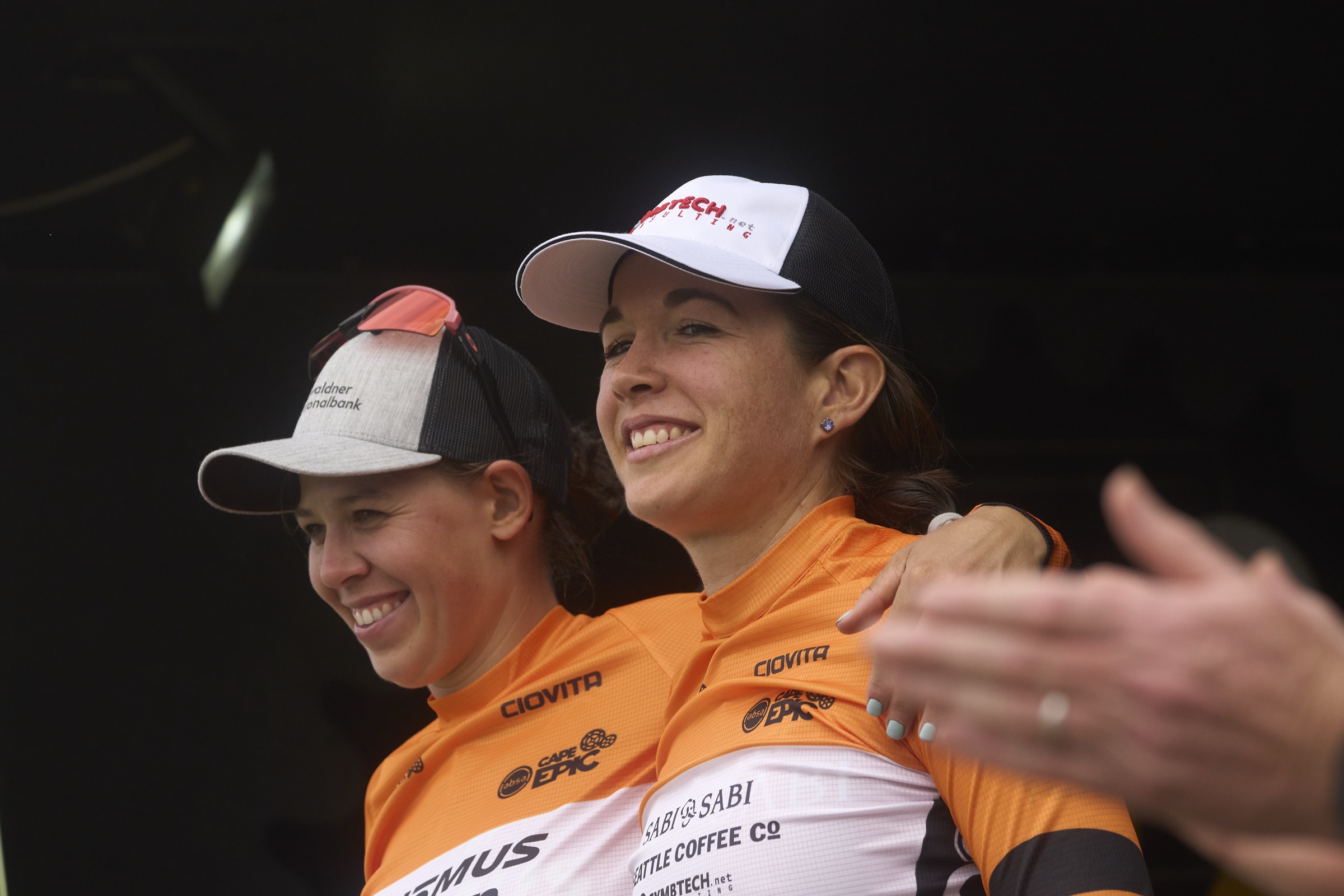
 Cape Epic · Michael Chiaretta
e-FORT AI
Most assistants read a session and give it back to you in words. This one has read your year, your night, your goals and your constraints — and answers the question you actually asked.
Three things happen before you get an answer.
Before answering, it loads your context: what you have ridden, how you have recovered, what you are training for and how much time you actually have.
A session is not judged on its averages, but on what it was supposed to achieve. That is the difference between a report and a debrief.
It doesn’t stop at advice. It writes to your plan, creates and adjusts your sessions — always with your explicit approval, never behind your back.
What it has already read before you type a word.
Fitness accumulated over 42 days, fatigue over 7, and the shape trend across the season.
Your effective capacity, recalculated this morning — not the number you entered six months ago.
Heart-rate variability, resting heart rate and sleep quality, read every morning before you get on the bike.
The days you can actually train, the events you have entered, and the deadline that matters.
Second by second, not as averages: where the effort went, and what it produced on the ground.
What was scheduled, what you actually did, and the gap between the two.
Validated physiological models, applied to your data rather than quoted at you.
How you actually ride: gear choices, cadence and terrain, cross-referenced with what your bike recorded.
Four capabilities. One intelligence.
From the daily debrief to the race strategy. Each module uses what the others already know.
Module 01 · Premium · Pro
A conversation in plain language with an intelligence that has read every ride of your last 365 days. Ask a question — it answers with precise figures, explains the physiology and proposes a concrete action.
e-FORT AI
Contextual coach · 365 days of history
You · 21:47
Why did I crack at km 34 today?e-FORT AI · 21:47
Not the heat. Your anaerobic reserve was already down to 18 % before the effort — you had burned 67 % of it on the two previous climbs, at km 18 and km 27. Your cardiac kinetics show you were recovering poorly since yesterday (HRV −12 % overnight).Module 02 · Premium · Pro
Your plan recomputes every morning. A bad night and Wednesday’s interval block becomes zone 2. Excellent recovery and the AI brings a key session forward to make the most of it.
It respects your goals, your constraints — three sessions a week, never on Sunday — and your shape today. Always.
Plan · Week 14
Recomputed this morning · 07:04
| Day | Session | Target |
|---|---|---|
| LUN | Rest | — |
| MAR | Endurance Z2 | 198–215 W · 90′ |
| MER | Recovery (HIT moved) | 160 W · 60′ |
| JEU | HIT 4×8 min | 285 W · 32 min |
| VEN | Active recovery | — · 30′ |
| SAM | Long Z2 + sprints | 210 W · 4 h |
| DIM | Simulated race | racing |
Module 03 · Pro
Give it a course profile — a file, or simply a photo — and your capacity today. It returns a plan ready to load onto your bike computer, with targets segment by segment, calibrated to get you to the line fastest without emptying your reserve.
Marathon · strategy generated
140 km · 7 000 m D+
Module 04 · Pro
After every race, the AI analyses each effort spike and classifies it by its tactical role. It is the first objective measure of race craft — the hardest skill in the sport to put a number on. It tells you plainly how many watts you burned for nothing.
Race analysis
12 spikes detected · 7 productive
A
Attacks · 3
B
Bridges · 2
C
Responses · 2
D
Wasted · 5
It never decides in your place.
The AI maps what you say into physics. Deterministic code turns that physics into watts. The AI never picks a number on its own, and never modifies your plan without your explicit approval. Where a figure is measured, we say measured. Where it is inferred, we say inferred.
